ALPHA PHI ALPHA FRATERNITY, INC. DISTRICT OF ILLINOIs
The Blueprint of Poverty: Why Youth Sports Shouldn’t Be the Only Dream We Offer Black Boys Expanding
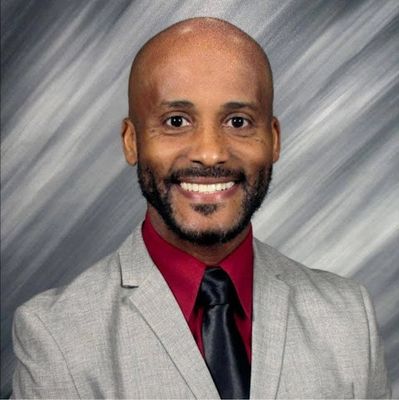
By Dr. Larue M. Fitch | Tau Sigma Lambda
In many urban communities across the United States, the narrative surrounding opportunity is often framed as one filled with endless possibilities. Yet for many children growing up in poverty, the range of visible possibilities can feel remarkably narrow. While talent and ambition exist everywhere, exposure to diverse pathways of success often does not.
For many young Black boys in under-resourced communities, the dream of becoming a professional athlete is not simply a childhood fantasy. It becomes one of the most visible—and sometimes the only—pathways to success that they consistently see reinforced.
I know this because I lived it.
Growing up in the 1990s and early 2000s, sports captured my imagination. Whenever someone asked me what I wanted to be when I grew up, my answer never changed: a football player. That dream felt natural. It felt attainable. In many ways, it felt expected.
The environment around me reinforced that vision daily. I remember hearing the voices of friends, neighbors, and adults in my community:
“Hey Larue, are you going out for football?”
“Are you lifting weights yet?”
“Man, that kid can bench press 200 pounds at 13 years old.”
“Keep running that football—you’re going to be amazing.”
These comments were encouraging. They reflected belief and pride. But they also revealed something deeper about the narratives we build for young people growing up in poverty.
Sports were not just an activity; they were often framed as a primary route to success.
Television reinforced this idea even further. Professional athletes were constantly highlighted as symbols of wealth, recognition, and upward mobility. For many young boys in urban communities, athletes represented the most visible examples of people who looked like them and had achieved financial success.
Yet the reality behind those dreams tells a far more complex story.
According to NCAA data, only a small percentage of college athletes ever reach the professional level. For example, fewer than 2 percent of NCAA football players are drafted into the NFL, and an even smaller percentage of high school athletes ever play professionally. The odds of making a long-term career in professional sports are extraordinarily slim.
Despite this reality, the dream remains powerful—and it continues to shape how many young people see their potential. Over time, I began to recognize what I now describe as “the blueprint of the poverty experience as it relates to sports.”
In many communities impacted by generational poverty, sports are not simply encouraged as a healthy extracurricular activity. They are often elevated as the most visible pathway toward success. When this narrative dominates without equal exposure to other forms of achievement—such as entrepreneurship, science, engineering, finance, medicine, or law—it can unintentionally limit how young people imagine their futures.
This is not an argument against sports. Athletics play an incredibly valuable role in youth development. Sports build discipline, teamwork, resilience, and perseverance. They create community pride and provide structure for young people.
But sports should be one opportunity among many, not the central identity offered to an entire generation of children.
The deeper issue is not sports themselves. It is the lack of exposure to the broader ecosystems of opportunity that exist beyond the playing field.
Too often, young athletes are encouraged to imagine themselves as the player or entertainer, but rarely are they introduced to the many professional pathways that surround sports. Ownership, sports management, marketing, analytics, law, media, and entrepreneurship are all industries connected to athletics—yet these roles are rarely part of the conversation in many communities.
Instead of asking young boys if they want to become team owners, sports executives, or business leaders, we often ask only whether they can run faster, jump higher, or throw farther. That distinction matters.
Ownership builds generational wealth. Entrepreneurship creates long-term opportunity. Leadership shapes institutions and communities.
If we want to expand opportunity, we must also expand imagination.
This shift must begin early. Schools, community organizations, and families can play an important role in helping young people understand the broader possibilities available to them. One meaningful step would be integrating learning experiences in elementary schools that focus on financial literacy, entrepreneurship, and generational wealth-building.
When children learn how businesses operate, how investments grow, and how innovation creates opportunity, they begin to view themselves differently. Their aspirations expand. They begin to imagine themselves not only as athletes, but as inventors, entrepreneurs, leaders, and builders of organizations.
This kind of education does something powerful: it gives children an alternative narrative about what success can look like.
Communities also have a role to play in reshaping the cultural emphasis surrounding youth development. Across the country, thousands of families fill gymnasiums and football fields every weekend to support youth athletics. The energy and pride surrounding these events can be inspiring.
But we should also ask an honest question: why do we see packed stands for youth sports while academic competitions, robotics programs, debate teams, and entrepreneurship clubs often struggle for the same level of visibility?
The issue is not enthusiasm for sports. The issue is balance.
Sometimes adults, often without realizing it, attempt to relive missed opportunities through the athletic dreams of the next generation. That dynamic can unintentionally shape how children define success.
We must instead help young people understand that their identities are far larger than their athletic abilities.
They are thinkers.
They are innovators.
They are problem-solvers.
They are leaders.
When children begin to recognize the power of their minds alongside the strength of their bodies, something transformative happens. Their ambitions broaden. Their confidence deepens. Their understanding of what is possible begins to expand.
And when that expansion takes place, the blueprint of poverty can slowly begin to change.
A new blueprint becomes possible—one where children are encouraged not only to perform on the field, but to lead in boardrooms, design groundbreaking technology, build thriving businesses, and shape the future of their communities.
Expanding opportunity starts with expanding imagination.
And imagination begins with what we choose to show our children is possible.
About the Author
Dr. Larue M. Fitch is the Founder of LM Fitch LLC, an educational consulting and leadership development organization focused on expanding opportunity, advancing culturally responsive leadership, and empowering communities through education, entrepreneurship, and critical thinking.
© 2026 LM Fitch LLC. All Rights Reserved.
Written by Dr. Larue M. Fitch. This article may not be reproduced, distributed, or transmitted in any form or by any means without prior written permission of LM Fitch LLC, except for brief quotations used in reviews with proper citation.